Mission Statement
“To be the principal provider of safe, reliable and efficient mass transit services and to consistently deliver the highest level of customer satisfaction to users of public transport in Barbados”
Motto
“You Are In Safe Hands With Us”
Profile of Transport Board
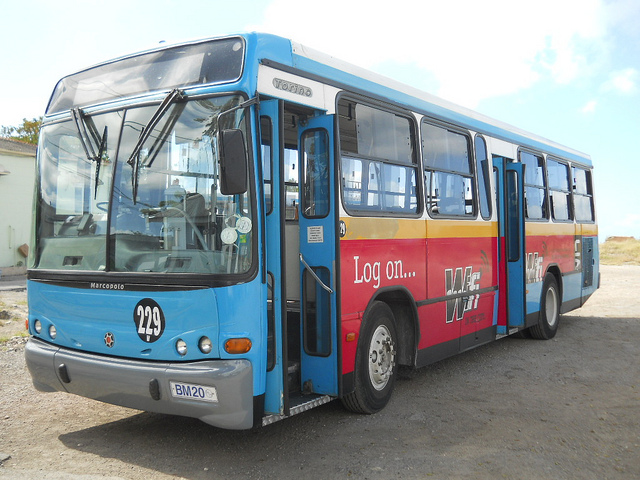
In June of 1955, the then Governor of Barbados, Sir Robert Duncan Harris Arundell, KCMG, approved draft legislation and the Transport Board was formed three months later by an Act of Parliament on August 24, 1955.
Before 1955, public transportation in Barbados was provided by a variety of public concessionaires, licensed by the Director of Highways and Transport to operate on specific routes. The private concessionaires were experiencing difficulties maintaining their bus fleets, and by September 1955, the Government of Barbados took over 116 buses from eight concessionaires. These buses were used by the newly established Transport Board on routes formerly held by the private concessionaires
The Beginnings
During the early years, the operation of the Transport Board was a learning experience for all. There was no provision for either housing or servicing of the vehicles and none of the offices in the Public Sector were familiar or had persons experienced in the management of a public transportation system.
Along with the older units inherited, the government was advised that forty new units would be required over the next four years in order to bring the service to an adequate level. After an injection of capital, it was felt by all concerned that the Board was now in a position to meet the needs of the travelling public.
The Present

The current Transport Board organisation has left its humble beginnings behind to become a vital constituent to the economic development of Barbados. The Government is conscious of the fact that the economy of the country is driven by its workers and their ability to get to and from work is fundamental to fiscal security. The Government of Barbados increased bus fares to $3.50 and maintained it as a fixed fare regardless of the distance to be travelled or the time of day for the travel.
The Board continues to maintain a complete fleet, inclusive of electric buses equipped with wheelchair facilities. The Board also has three terminals located at Fairchild Street, Bridgetown; Princess Alice Highway, St. Michael and Speightstown, St. Peter. A central staging depot is located at Mangrove, St. Philip, a sub-terminal at Oistins, Christ Church and its headquarters is located at Roebuck Street, Bridgetown. The Transport Board is intent on lowering our overall operating costs as well as reducing harmful emissions. To this end, we have commenced the transistion to an entire electric bus fleet, which will be more efficient than the existing diesel buses as well as provide us with a competitive advantage.
The Board’s management team consists of the Chief Executive Officer, Chief Operations Officer, Operations Manager, Accountant, Administration Officer and the Quality Assurance Officer. Additionally, there are four Terminal Managers at the three terminals and the one depot. The organisation is now operating on over seventy routes across the island, covering 6000km daily, making public transportation accessible to as many persons as possible.
70 Years of Service to Barbados
For 70 years, the Transport Board has played a central role in connecting communities and supporting national development across Barbados.
Established in 1955, the Transport Board was created to provide safe, reliable, and affordable public transportation for the people of Barbados. With a modest fleet and a dedicated workforce, the organisation began its journey with a clear public-service mandate – ensuring that mobility was accessible to all, regardless of location or circumstance.
As Barbados evolved, so too did the Transport Board. Over the decades, the organisation expanded its route network, strengthened operational capacity, and developed the infrastructure needed to serve a growing population. Generations of employees, including drivers, mechanics, clerical staff, supervisors, technicians, and support teams, contributed their skills, commitment, and pride to building a trusted national service.
Like all public institutions, the Transport Board has navigated periods of challenge, from economic pressures and fleet ageing to changing commuter expectations. Through it all, resilience and adaptability have remained defining characteristics of the organisation.
Today, the Transport Board stands at a transformative point in its history. The organisation is actively modernising its operations through the electrification of the fleet, investment in upgraded depots and workshops, improved safety and maintenance systems, and the integration of digital technologies to enhance efficiency and the customer experience.
These improvements reflect a broader national vision for sustainable and future-ready public transportation. As Barbados prepares for the next phase of mass transit under evolving governance arrangements, the Transport Board’s legacy remains firmly embedded in the foundation of the system being built.
Our past has shaped who we are. Our people continue to define what we deliver. And our commitment to serving Barbados remains unwavering.
Seventy years strong — still moving Barbados forward.
The Future
As the Transport Board looks towards the future, the decision has been made to utilise more information technology in our day-to-day operations, including GPS tracking and the introduction of an Automatic Fare Collection system, which will see our commuters using reloadable, smart cards. Not only will this significantly improve our customer service, but also usher in many features to create a much better experience for our customers.
